Helping cats and dogs live their healthiest lives.

Supporting pets' skin comfort, every day

See some of the sources of skin issues in cats and dogs:
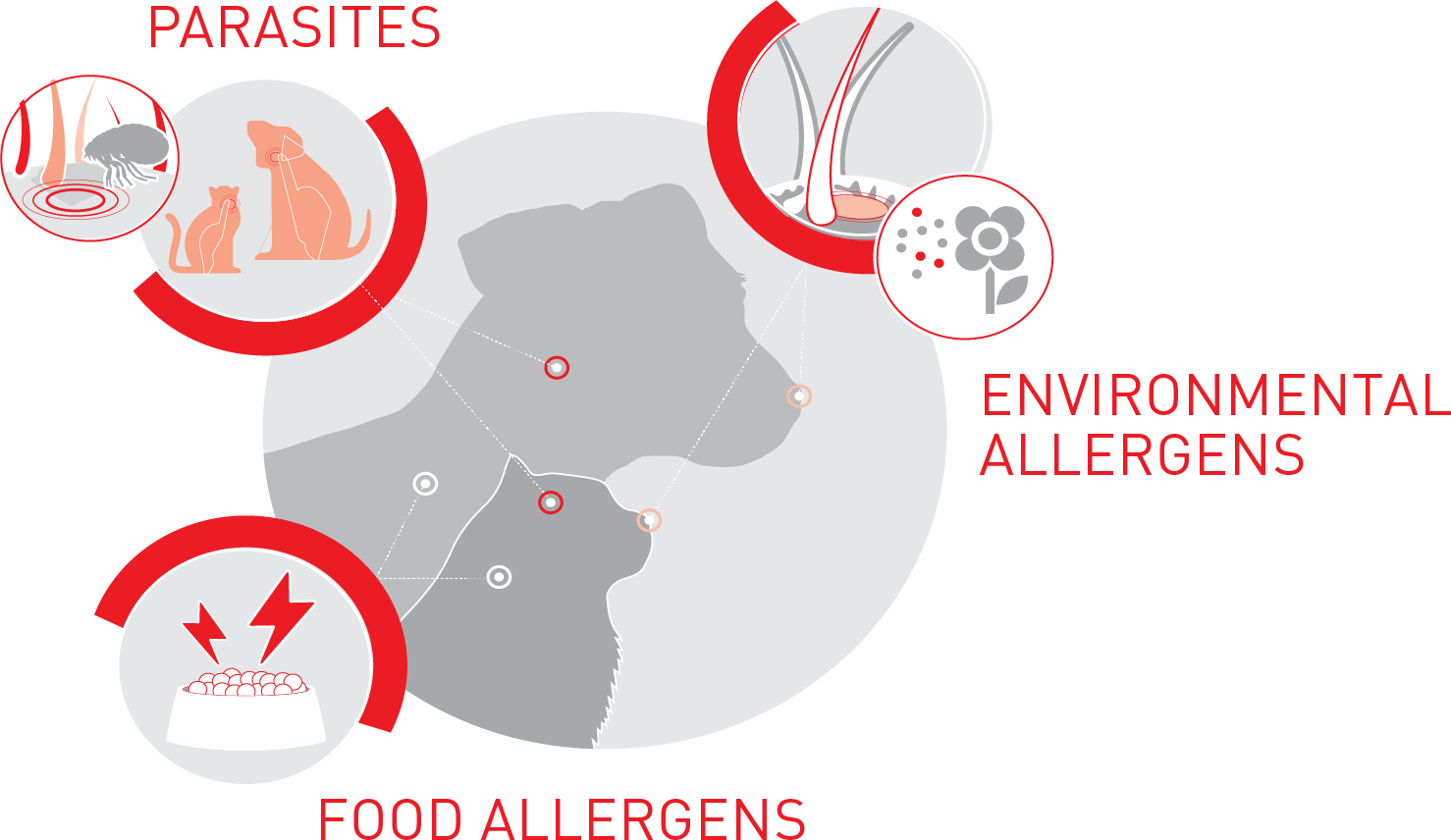
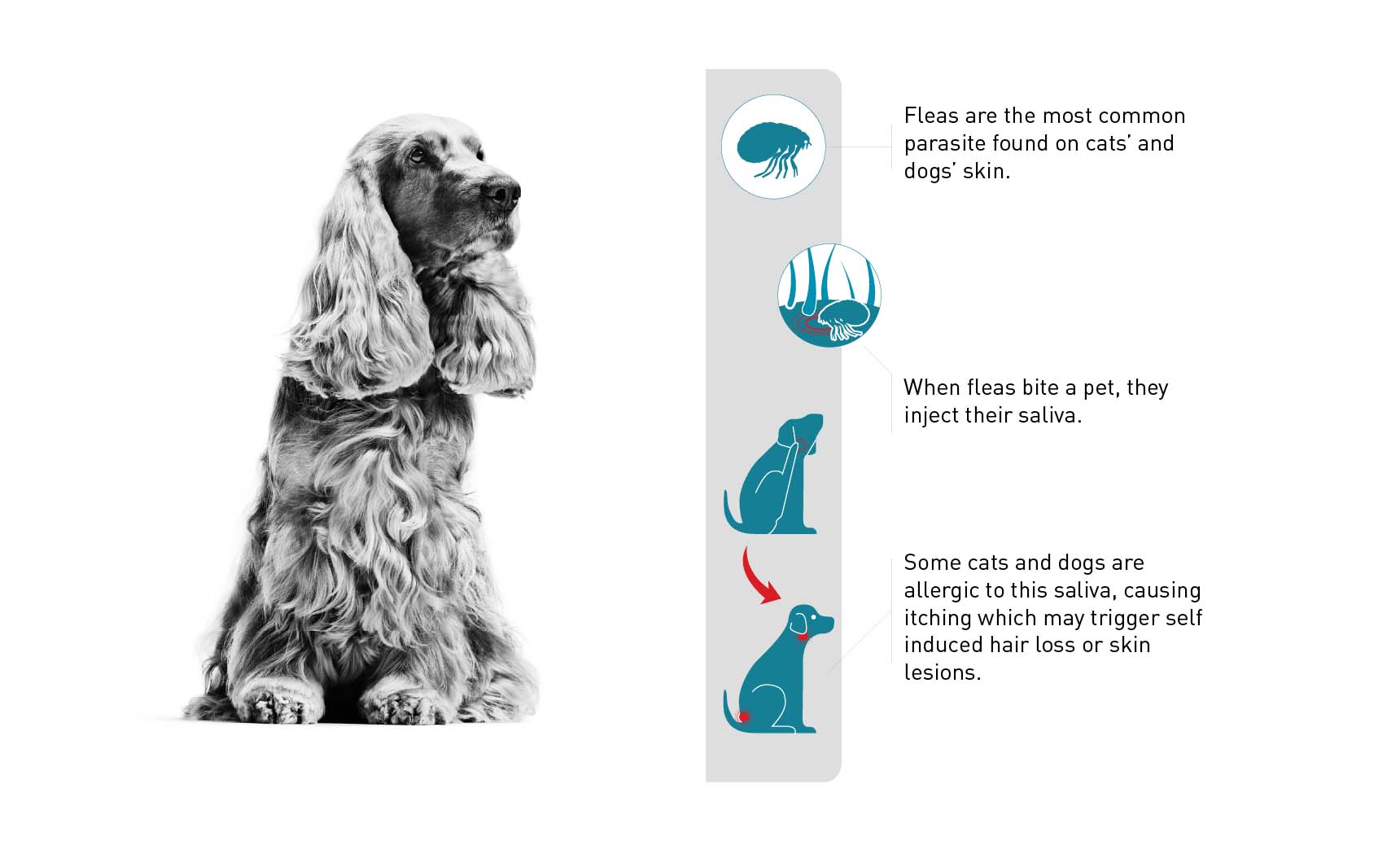
External parasites such as fleas, ticks or mites can cause skin reactions like itching and hair loss.
Pets, just like humans, can react to environmental allergens such as pollen or dust. These allergens can cause skin redness, scratching, rashes, and chronic otitis.
In the case of food allergy, the immune system mistakes normal, large dietary proteins as harmful substances and reacts against them, triggering a food allergy. The allergic reaction may result in symptoms such as itching, skin inflammation, loose stools or vomiting.
It is often the most difficult dermatology case to diagnose, and as such is typically tested for in pets once already screened for parasites and treated for any skin infections to reveal any further environmental triggers.
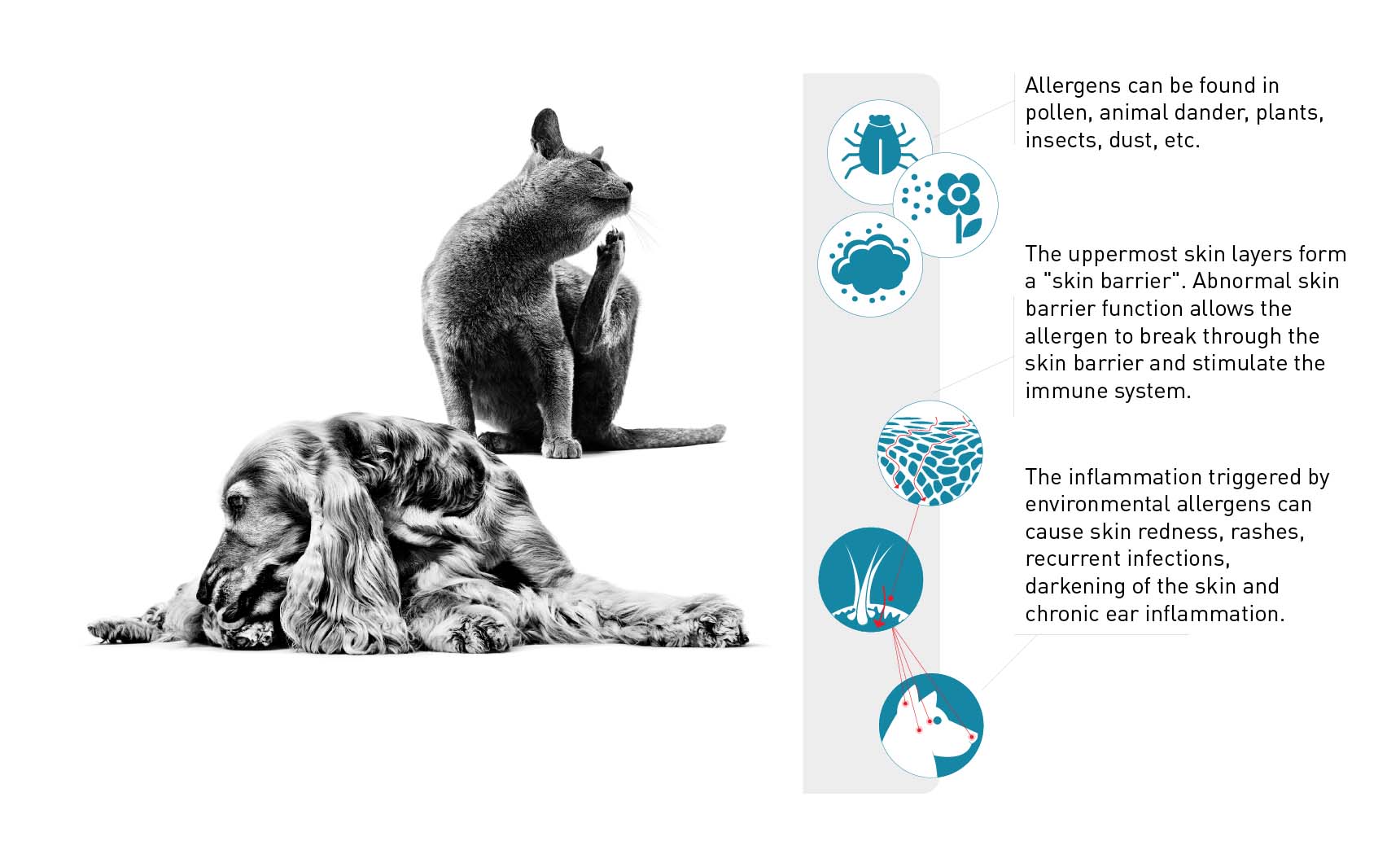
In Dermatological cases where a clinical assessment is required, checking for parasites can be the first diagnostic test undertaken by veterinarians. Such parasites can include: Sarcoptes scabiei, Ctenocephalides felis, Demodex canis, and Otodectes cynotis.
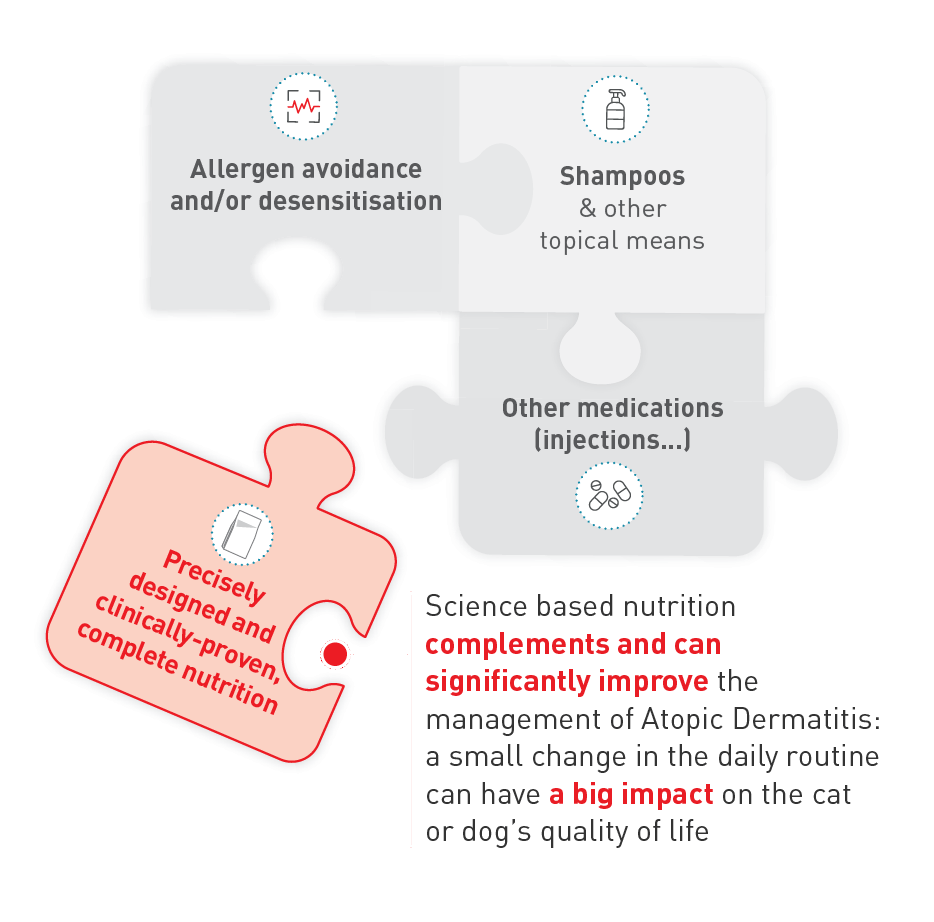
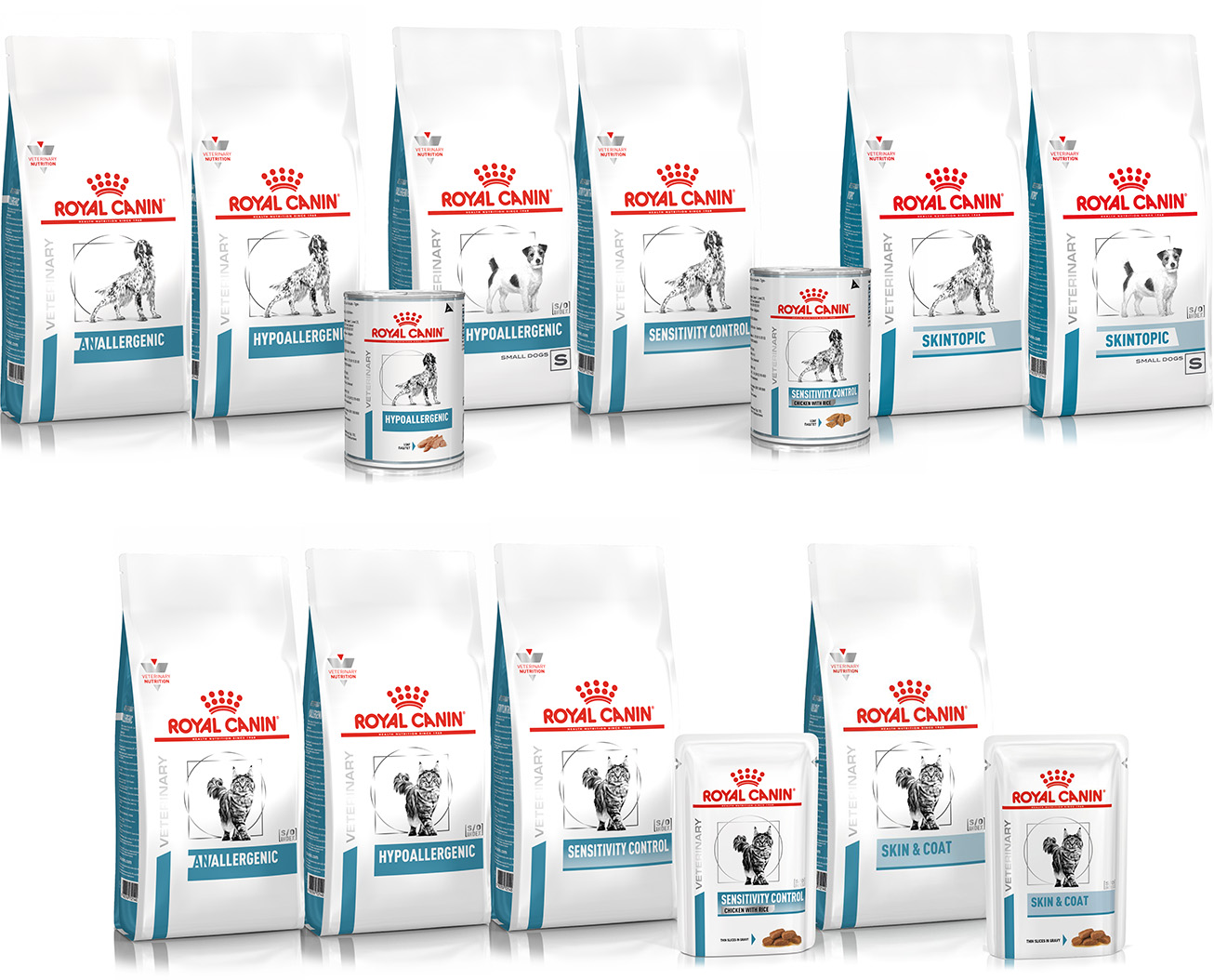
Another mode of management, nutritional therapy, can physically benefit the defensive skin structure to help minimise antigenic presentation to the local immunity.
Dietary formulations enriched with essential fatty acids support reduction of inflammation and improve ceremide function to help strengthen the compromised barrier. Additional nutritional support for the atopic patient can come in the form of: Amino acids for cell repair and regeneration; Specific vitamins and minerals involved in keratinisation, fatty acid metabolism and reduction of oxidation; Selected nutrients supporting fibroblast migration to support wound repair.
Where compliance can be difficult, supporting patient health with something given without fail or issue, their food, is a modality beneficial for all.

Adverse food reaction (AFR) is an important differential in non-seasonal pruritic skin and ear diseases in dogs and cats. AFR encompasses both immunologic (food allergy) and non-immunologic (food intolerance), although the distinction is not always clear.
What are the known foods to cause AFR?
The most commonly implicated food or food ingredients to cause adverse food reactions in dogs and cats are beef, dairy, chicken, and fish. Food preservatives and colourings are often incriminated however there is little data to support these claims.

We've been featured in Vet Practice Magazine.
Written by Dr. Mina Cassimatis
BVSc (Hons) MVS, Scientific Services Veterinarian Manager ANZ
Dietary elimination trials are one of the longest diagnostic assessments we undertake as veterinarians. Furthermore, success relies heavily on our clients to remain strictly compliant with the feeding practice we recommend for a period of 8-12 weeks, and for the pets to also accept the change to their daily feeding routine.
|

|
Book a training session with your Royal Canin representative now. If you're not sure who your sales representative is, email consumercare.anz@royalcanin.com or call 1800 622 969